
Lab-Grown vs. Natural Diamonds: What's Actually Different?
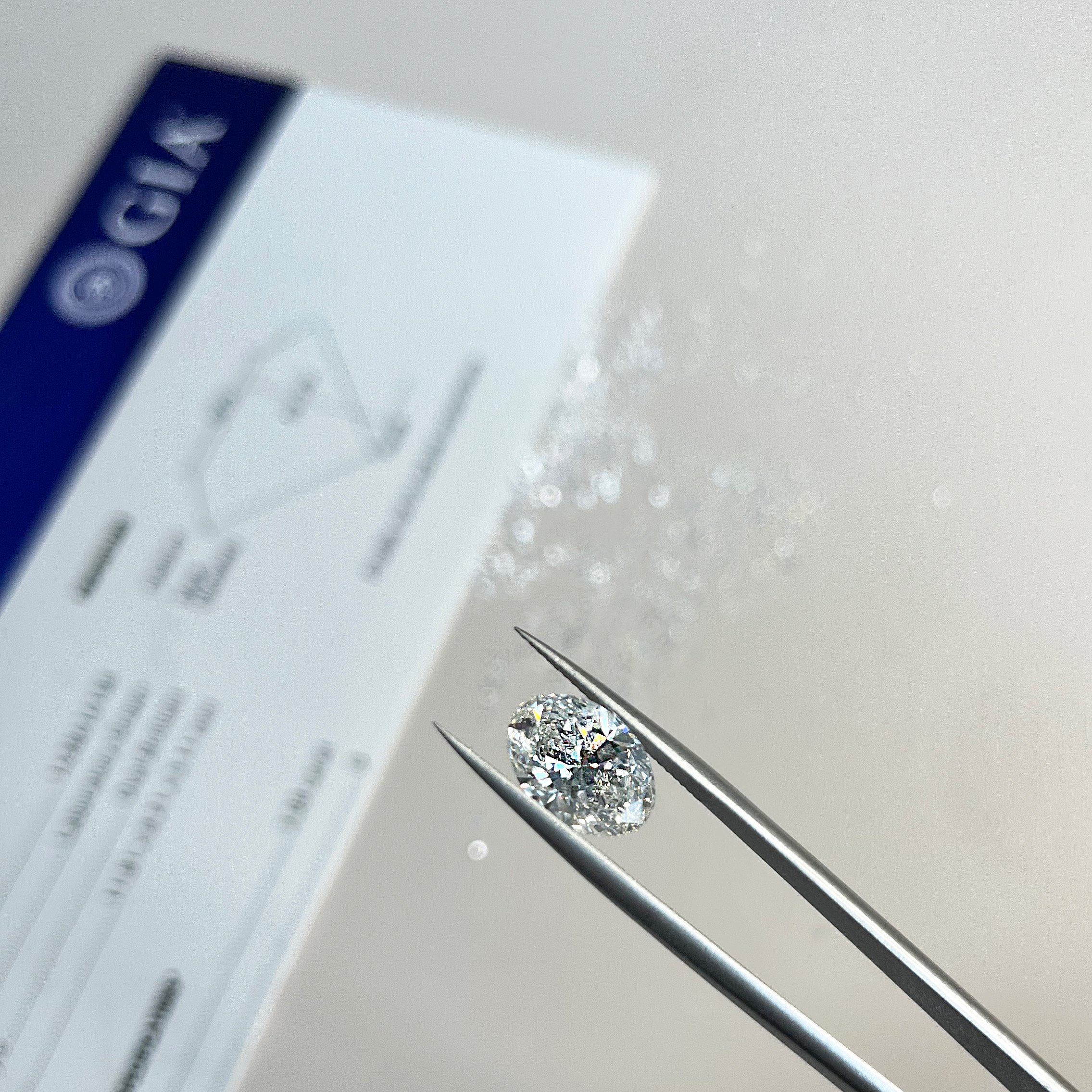
Picture of a certified lab diamond graded by the GIA
This is one of the most common questions I get in consultations, usually somewhere between "what shape do you like" and "what's your budget." And it's a fair question. A decade ago, lab-grown diamonds barely registered in engagement ring conversations. Today, they're a completely normal, respected option, and for a lot of my clients, the right one.
Here's what actually separates the two, without the sales pitch either direction.
They're chemically the same stone
A lab-grown diamond isn't a simulant or a substitute the way cubic zirconia or moissanite are. It's carbon, crystallized into the exact same structure as a natural diamond, just grown in a controlled lab environment over weeks instead of formed underground over a billion years. Optically, chemically, and structurally, they're identical. Even trained gemologists can't tell them apart without specialized equipment.
The real difference is origin, not appearance
A natural diamond formed deep in the earth long before recorded history, and made its way to you through mining, cutting, and a supply chain with real weight and history behind it. A lab-grown diamond was created intentionally, recently, by scientists replicating that same natural process. Neither is "fake." They're just different stories.
Price is where most people feel the difference
Lab-grown diamonds typically cost 60 to 80 percent less than a natural diamond of comparable size, cut, and clarity. That gap means you can often go noticeably larger or cleaner on a lab-grown stone for the same budget, or put more of your budget toward the setting and design itself.
Certification matters either way
Whichever you choose, make sure it's certified. Reputable labs like GIA and IGI grade both natural and lab-grown diamonds using the same 4Cs standard, cut, color, clarity, and carat. A certified stone means you know exactly what you're getting, regardless of where it came from.
So which one is right for you?
Honestly, it depends on what matters most to you. If the rarity and geological history of a natural stone is part of what makes an engagement ring meaningful to you, that's worth paying for. If you'd rather maximize size and clarity within your budget, or if sourcing and environmental impact matter more to you, lab-grown is a genuinely excellent choice with zero compromise on beauty or durability.
There's no wrong answer here, only the one that fits your priorities and your story.
Not sure which is right for your ring? Book a consultation and we'll talk through it together, no pressure either way.